Thinking about Invisalign but not sure how it works? Here in Honolulu, many patients from neighborhoods like Kakaʻāko, Ala Moana, and Makiki are choosing clear aligners to get a straighter smile without the hassle of metal braces. This article walks you through every step of the Invisalign process so you know exactly what to expect. Dr. Eugene Azuma, a respected expert in dental and sleep medicine, brings years of experience to each custom plan. If you’re looking for a clear, comfortable, and convenient orthodontic solution, Invisalign might be the answer.
Dr. Azuma received his DDS from Georgetown University and serves as Vice President of the American Sleep and Breathing Academy. His scientific background and compassionate care have earned him recognition across Honolulu and beyond. When patients from Downtown Honolulu to Mānoa come in for Invisalign, they often leave saying, “Why didn’t I do this sooner?”
What Happens During Your Invisalign Consultation?
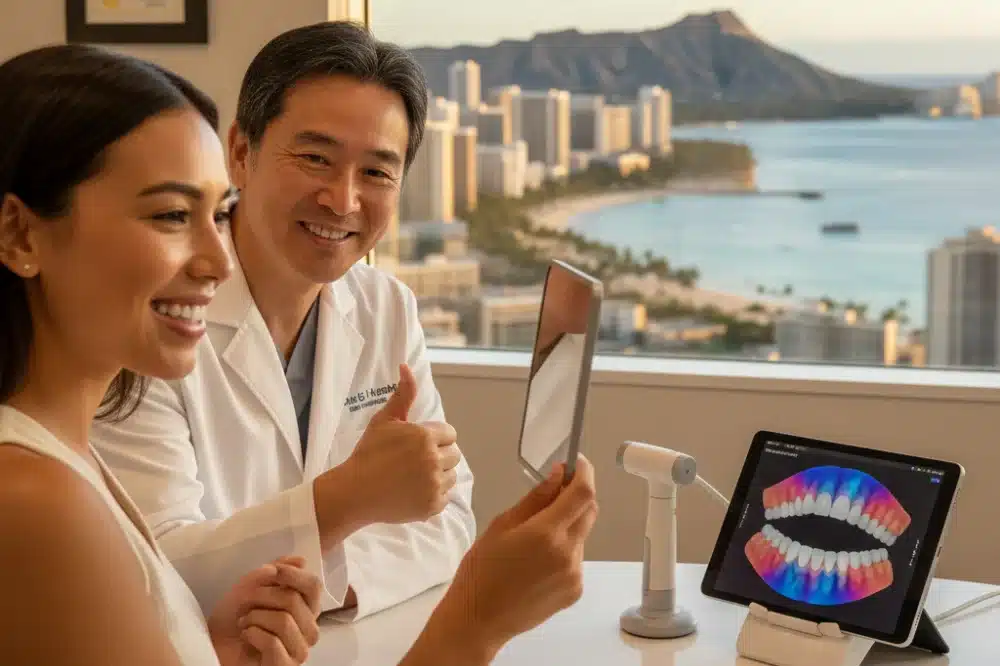
Your Invisalign journey starts with a consultation at Dr. Eugene Azuma’s office near Ward Village and the King Street Corridor. This first visit is all about discovery, what your smile goals are, and whether Invisalign can help get you there. Dr. Azuma will perform a detailed oral exam and take digital scans of your teeth. These 3D scans are fast, precise, and completely painless.
Using Invisalign’s advanced software, we create a digital map of your smile. You’ll even get to see a preview of how your teeth can look after treatment. Dr. Azuma uses this time to answer questions, explain the timeline, and walk you through how Invisalign works. There’s no pressure. It’s just a friendly conversation to help you make an informed choice.
Getting Fitted: Your Custom Aligners Arrive
Once you decide to move forward, your custom aligners are created using your 3D scans. This can take a few weeks, but patients from Waikīkī to Kaimukī say it’s worth the wait. Each set of aligners is designed to shift your teeth gradually into better alignment. They’re made from SmartTrack® material, which is smooth, clear, and fits snugly against your teeth.
When your first set arrives, you’ll come in for a fitting. Dr. Azuma will check the fit and give you instructions on how to wear and care for your aligners. Most people wear each set for about one to two weeks, for 20 to 22 hours a day. The best part? They’re nearly invisible and easy to remove when eating or brushing.
What Daily Life with Invisalign Looks Like
Invisalign aligners are a popular choice among teens and adults in Honolulu because they blend so easily into everyday life. Whether you’re enjoying coffee in McCully-Moʻiʻiʻlii or attending a business meeting in Pacific Heights, you can smile confidently.
Here are a few things patients appreciate about daily life with Invisalign:
- No food restrictions: Just take your aligners out before eating.
- Easier brushing and flossing: No wires to work around.
- Comfortable fit: Fewer mouth irritations than metal braces.
You’ll need to clean your aligners regularly and follow your wear schedule closely. Skipping days or wearing them too little can delay your results. Dr. Azuma’s team offers ongoing support, and you’ll have regular check-ins to monitor progress.
Invisalign works best when worn consistently, so having a routine helps. Patients in neighborhoods like Punahou and Kapahulu often say that the aligners become a normal part of their day within the first week.

How Long Does Invisalign Take to Work?
Treatment time varies from person to person, but most Invisalign plans take between 6 and 18 months. Simple spacing issues may resolve quickly, while more complex bite problems may need more time. During your initial consultation, Dr. Azuma will estimate your timeline based on your goals and how your teeth are currently aligned.
You’ll come in for check-ins every 6 to 8 weeks to pick up new aligners and make sure your teeth are moving correctly. These appointments are quick and convenient. Many of our patients from Tantalus to Palolo appreciate how easy it is to fit Invisalign into their schedule.
Key Benefits of Choosing Invisalign in Honolulu
People choose Invisalign for different reasons, but the results speak for themselves. Here are some of the biggest advantages that make it such a popular choice across Honolulu:
- Discreet appearance: Clear aligners are barely noticeable.
- Better oral hygiene: You can brush and floss normally.
- Comfortable material: Smooth design means no sharp brackets.
- No dietary changes: Eat the foods you love by removing aligners.
- Fewer office visits: Quick appointments and no emergency wire repairs.
Patients in Punchbowl, Palolo, and Keeaumoku often mention how convenient it is to improve their smile without changing their lifestyle. Invisalign is designed for busy people who want results without hassle.
Invisalign vs. Traditional Braces: What’s the Difference?
When it comes to straightening teeth, both Invisalign and traditional braces are effective, but the experience can feel very different. Patients across Honolulu often ask which is better, and the truth is, it depends on your lifestyle and personal preferences. Some people prefer the clear, removable convenience of Invisalign. Others may need the fixed precision of traditional braces, especially for more complex cases.
This side-by-side comparison helps make the differences clearer:
| Feature | Invisalign | Traditional Braces |
| Visibility | Nearly invisible | Metal wires and brackets |
| Comfort | Smooth aligners | Possible irritation from wires |
| Removability | Removable | Fixed to your teeth |
| Eating | No food restrictions | Many food restrictions |
| Hygiene | Brush and floss normally | Harder to clean around braces |
| Office Visits | Fewer needed | More frequent adjustments |
Invisalign is often a top choice for adults and professionals who want subtle results without the noticeable appearance of metal braces. It’s particularly popular in neighborhoods like Ward Village and Lower Makiki, where busy schedules and personal appearance often factor into orthodontic decisions. With its removable trays and minimal interference with daily life, Invisalign provides a more flexible path to a straighter smile.
Common Tips for Successful Invisalign Treatment
Getting the most out of Invisalign requires a little bit of planning and consistency. Patients from Kakaʻāko to Mānoa often ask what helps them stay on track, and we hear the same advice again and again. Start by wearing your aligners for 20 to 22 hours each day. Consistency here is key. The more you wear them, the better your results.
Cleanliness also matters. Rinse your aligners with lukewarm water and use a soft toothbrush to gently scrub away any buildup. Make it part of your morning and evening routine. When you’re not wearing your aligners, store them in their case to avoid loss or damage. This helps prevent accidental breaks or bacteria buildup.
And finally, don’t fall behind on your aligner switch schedule. Each new set brings you one step closer to your goal. If you stick to the plan and show up for your check-ins, you’ll usually see changes within a few weeks. Throughout the process, Dr. Azuma and his team are here to support you every step of the way.
Taking the Next Step Toward a Straighter Smile
If you’ve been thinking about Invisalign, there’s no better time to start. At the office of Dr. Eugene Azuma, we understand that your smile is personal. That’s why we take the time to listen, evaluate your goals, and walk you through every part of the process. Invisalign isn’t just about straighter teeth, it’s about feeling more confident when you speak, smile, or laugh.
Dr. Azuma and our Honolulu team are ready to help you take that first step. From the consultation to the final aligner, we’re here to guide you with experience, empathy, and proven results.
Schedule your Invisalign consultation today by calling (808) 528-2221 or visiting Dr. Eugene Azuma, DDS.
Frequently Asked Questions
How long does the Invisalign process take for most patients?
Patients want a realistic timeline so they can plan around school, work, or events.
What they should ask instead: How long will my Invisalign treatment likely take, and what helps keep it on schedule?
- Immediate Insight: For most people, Invisalign treatment takes about 6–18 months, with minor crowding or spacing at the shorter end and more complex bite issues taking longer.
- Supporting Context: The American Association of Orthodontists notes that clear aligner timing depends heavily on wearing them as directed (usually 20–22 hours per day) and changing trays on schedule; missed wear time is the most common cause of delays.
- Deeper Implication: Following your orthodontist’s instructions closely, full-time wear, good hygiene, and attending check-ins, matters as much as the treatment plan itself for finishing on time.
Are Invisalign aligners painful to wear?
Fear of pain can keep people from starting treatment even when they want straighter teeth.
What they should ask instead: What kind of discomfort should I expect with Invisalign, especially when starting new trays?
- Immediate Insight: Most patients feel mild pressure or tenderness for a few days when starting a new aligner, this is normal and a sign that teeth are moving, but ongoing sharp pain is uncommon.
- Supporting Context: Harvard Health and dental organizations report that, compared with metal braces, clear aligners typically cause less soft-tissue irritation because they lack brackets and wires that can rub or poke cheeks and lips.
- Deeper Implication: Using over‑the‑counter pain relief if needed, switching to a new tray at night, and wearing aligners consistently usually keeps discomfort manageable and short‑lived.
Can I eat with my Invisalign aligners in?
Eating habits directly affect comfort, hygiene, and tray longevity.
What they should ask instead: What’s the safest way to handle meals and drinks while in Invisalign treatment?
- Immediate Insight: No, remove your aligners to eat or drink anything except plain water. Chewing with aligners in can crack or distort them and trap food and sugar against your teeth.
- Supporting Context: Professional guidelines recommend taking trays out, eating and drinking as normal, brushing or at least rinsing your mouth, rinsing the aligners, and then putting them back in to keep them clear and odor‑free.
- Deeper Implication: Building a routine (case with you, quick rinse after meals) helps you hit the recommended daily wear time without sacrificing oral health or aligner appearance.
Is Invisalign effective for teens?
Parents and teens want to know if clear aligners will really work as well as braces.
What they should ask instead: When is Invisalign a good option for teens, and how do we know it will be effective?
- Immediate Insight: Yes, Invisalign and other clear aligners can be very effective for many mild to moderate orthodontic issues in teens, especially when the teen is motivated and responsible about wear time.
- Supporting Context: The American Association of Orthodontists notes that teen-specific aligner systems often include compliance indicators (small wear marks) and are designed for growing mouths; they work best when supervised by an orthodontist who can judge case complexity.
- Deeper Implication: For teens who want a more discreet option and can commit to wearing aligners as instructed, clear aligners can deliver predictable results comparable to braces in well‑selected cases.