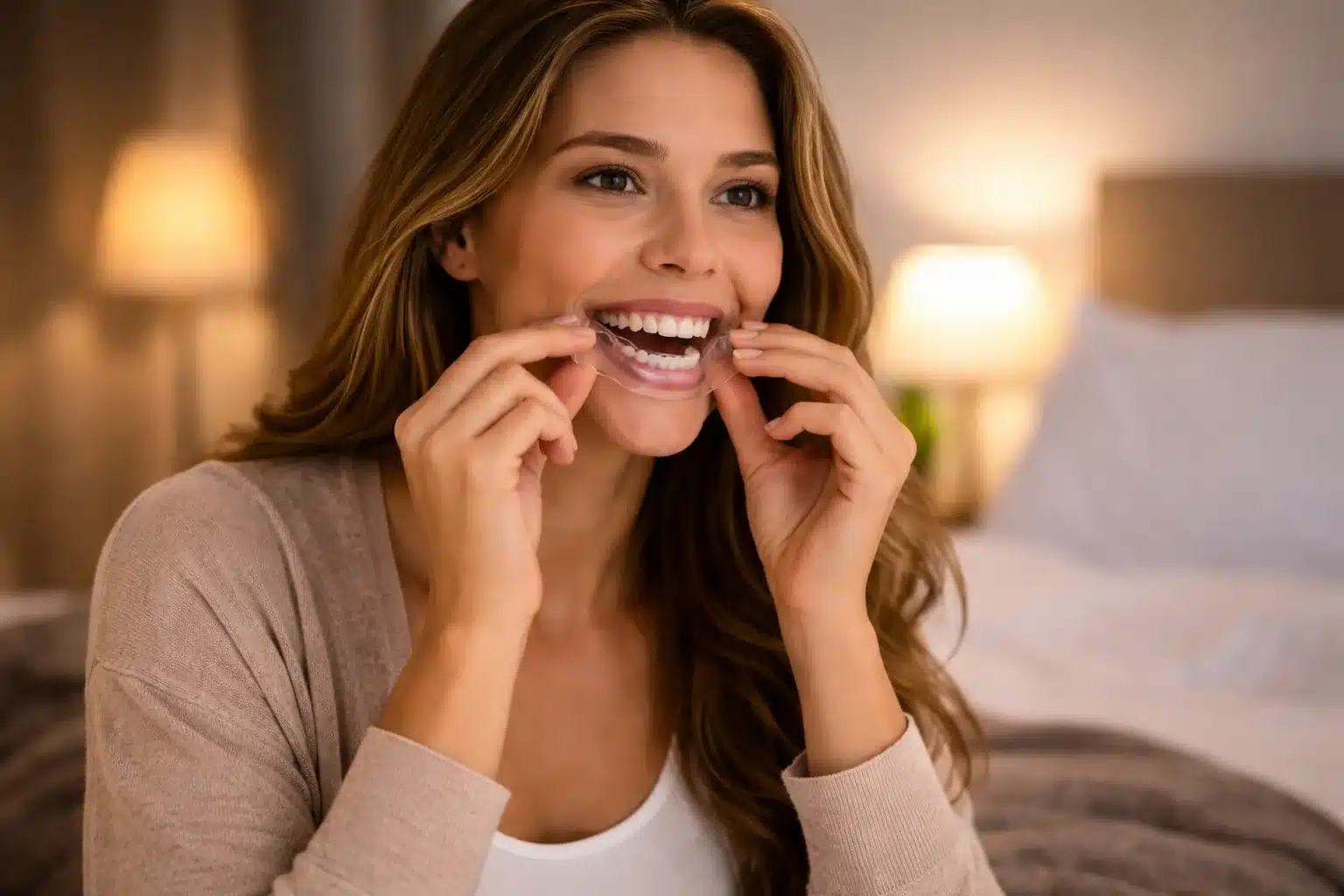
A drugstore night guard in Honolulu costs about thirty dollars and sits on the shelf today. A custom guard runs several hundred dollars and takes two appointments. The fair question is whether that gap buys better protection. Research gives a sharper answer here than either side usually admits. Dr. Eugene Azuma DDS fits both kinds of patients at his Honolulu practice. Plenty of them arrive already holding a pharmacy guard.
You will finish this page knowing what the trial data shows about each option. You will also know when the cheap guard makes sense, and when it turns into a costly mistake. If you know you want one fitted, start with custom night guards in Honolulu and call the office. Everyone else, the numbers below are worth five minutes.
Do Drugstore Night Guards Work at All?
They can, and that surprises people who expect a dentist to say otherwise. A University of Michigan randomized trial followed 61 bruxism patients for four months. One group wore a lab-made custom splint, the other a boil-and-bite guard. On stability, retention, gum health, and material wear, the two performed about the same.
Source: Gerstner et al, Over-the-counter bite splints, a randomized controlled trial of compliance and efficacy, Clinical and Experimental Dental Research, August 2020. Funded by the Delta Dental Foundation of Michigan.
So the material itself is not the problem, and cost alone does not decide the outcome. Patient satisfaction scores came out similar between the groups. So did compliance, meaning both groups wore their guards about as often as each other.
The trouble showed up somewhere that nobody markets against, and it was not the plastic or the price tag. It was whether the patient managed to form the thing correctly in the first place.
What Goes Wrong When You Fit It Yourself?
Here is the finding that reframes the whole comparison. Of 31 guards that patients formed themselves, only four met clinically acceptable standards. Ninety percent carried a critical error, with a dentist sitting in the room.
- Poor alignment on the biting surface, found in nearly nine of ten guards
- Not enough coverage on the back molars, or far too much
- Material stretched thin during the hot water step
- Deep bite marks pressed in, despite instructions saying not to bite
- Material folded over onto itself
- Uneven contact when the patient closed down
Fitting took an average of fourteen minutes, and 93 percent had to remold at least once.
Source: Gerstner et al, Clinical and Experimental Dental Research, August 2020. These were motivated volunteers in a dental school, following printed instructions with help available nearby. A guard fitted over a bathroom sink at eleven at night faces worse odds than that.
Custom or Drugstore: What Does Each One Buy You?
The honest comparison is not about which plastic is tougher. It comes down to fit, oversight, and what happens when the fit goes wrong.
| Drugstore boil-and-bite | Custom from a dentist | |
| Cost | Roughly $30 | $200 to $1,000 for oral appliances |
| Available | Today, off the shelf | Two appointments |
| Fitted correctly | 4 of 31 in the trial | Checked and adjusted in the chair |
| Lifespan | Months | 3 to 5 years |
| Nighttime muscle activity | 31.2 bursts per hour | 18.8 bursts per hour |
| Stops grinding | No | No |
| Someone checks it | Nobody | Your dentist, at each visit |
Source: bursts per hour and fit rates from the University of Michigan trial. Cost and lifespan figures published by the practice.
That muscle activity row deserves a second look, because it points the wrong way for the cheap option. Patients wearing the drugstore guard showed far more nighttime jaw muscle bursts. The researchers noted that a poorly fitted guard may make grinding worse rather than better.
Which One Should You Buy?
Neither answer fits every mouth walking through the door. Match the guard to how hard you grind and what dental work you already have.
- Occasional grinding, no crowns or veneers, no jaw pain: a drugstore guard is a reasonable place to start
- Grinding most nights, or waking with jaw soreness: go custom
- Existing crowns, veneers, bridges, or implants: go custom, since replacements cost far more
- Any diagnosed TMJ disorder: get TMJ therapy in Honolulu assessed before buying anything
- Already own a boil-and-bite guard: bring it to your next appointment and have the fit checked
That last point matters more than it sounds, and the trial authors made the same recommendation. They urged dentists to stay involved with patients using self-fabricated appliances. The device tested in that study is no longer sold over the counter, and reaches patients only through dentists now.

Will Either One Stop the Grinding?
No, and any product claiming otherwise is overselling what it can do. Oral appliances do not inhibit sleep bruxism, which is settled in the research, though marketing leaves it out. A guard is armor rather than treatment, protecting enamel while the grinding continues underneath it.
That is why the cause still matters after you buy one. Nighttime teeth grinding sometimes traces back to breathing rather than stress. A guard placed without that conversation protects the teeth and leaves the driver completely untouched.
What Does a Custom Night Guard Cost in Honolulu?
Oral appliances at this practice run between $200 and $1,000, and where you land depends on the design and materials. A custom guard typically lasts three to five years with reasonable care. Spread across that span, the yearly cost sits closer to the drugstore option than the sticker price suggests.
Insurance is where this gets frustrating for heavy grinders. Many plans cover one guard per lifetime, and guards rarely last a lifetime. The trial authors flagged that same problem in their discussion. Patients who most need replacements end up paying the most out of pocket.
Ask about coverage before treatment rather than after, and get the answer in writing. Coverage varies by plan and by how your carrier codes an occlusal guard. What any individual policy pays is a question only your carrier can answer.
The Cheapest Guard Is the One That Fits Properly
Nobody enjoys spending several hundred dollars on a piece of plastic they wear while unconscious. The trial data makes the tradeoff clear enough to decide on. The drugstore guard is not bad plastic, though it is very hard to fit correctly. A bad fit can quietly work against you instead. Dr. Eugene Azuma DDS at Eugene M. Azuma DDS, Inc. fits guards and checks existing ones across Honolulu.
Bring whatever you are wearing now, even a pharmacy guard. A fit check takes minutes and tells you whether your current guard is protecting anything at all. Call (808) 528-2221 or request an appointment online at dreugeneazuma.com today. Individual results vary, and what suits your mouth depends on the exam.
Frequently Asked Questions
How long does a drugstore night guard last?
Usually months rather than years, and heavy grinders wear through them faster. Softer thermoplastic compresses under sustained force, which is exactly why the fit loosens over time. Cleveland Clinic calls a custom mouth guard the most common treatment for bruxism, partly because it holds shape. A custom guard from a dental lab typically lasts three to five years with reasonable care. Replace any guard once you see wear through the surface.
Can a badly fitted night guard make grinding worse?
The trial data suggests that it can, at least sometimes. Patients wearing the self-fitted guard showed far more nighttime jaw muscle bursts than those given a lab-made splint. The researchers stopped well before calling that clinically significant. If your jaw feels worse since you started wearing a guard, have the fit checked.
Does insurance cover a custom night guard?
Often partly, though the details vary more than most people expect. Many plans code it as an occlusal guard and cover one per lifetime. That becomes a real problem for anyone needing a replacement. Mayo Clinic outlines how bruxism is diagnosed and managed, and documented grinding sometimes strengthens a claim considerably. Ask your carrier for the code and the replacement interval.
Should I bring my drugstore guard to the dentist?
Yes, and the researchers behind that trial recommended exactly that. Johns Hopkins Medicine notes that people clench with considerable force during sleep, so a poorly seated guard loads unevenly. A fit check costs nothing beyond the appointment you booked. If it fits and works well, keep wearing it.