A home sleep apnea test can help you figure out what is going on without staying overnight in a lab. For many people, that removes a big barrier and gets things moving sooner. The real question is whether it gives you a reliable answer for your situation.
At Azuma Dental, Dr. Eugene M. Azuma, DDS helps you decide which path actually makes sense before you start. He works with local sleep physicians so your results are reviewed and turned into a clear plan. Patients across Ala Moana, Kakaʻako, and Waikiki usually want one thing first, which is a direct answer they can trust.
What Is a Home Sleep Apnea Test (HSAT)?
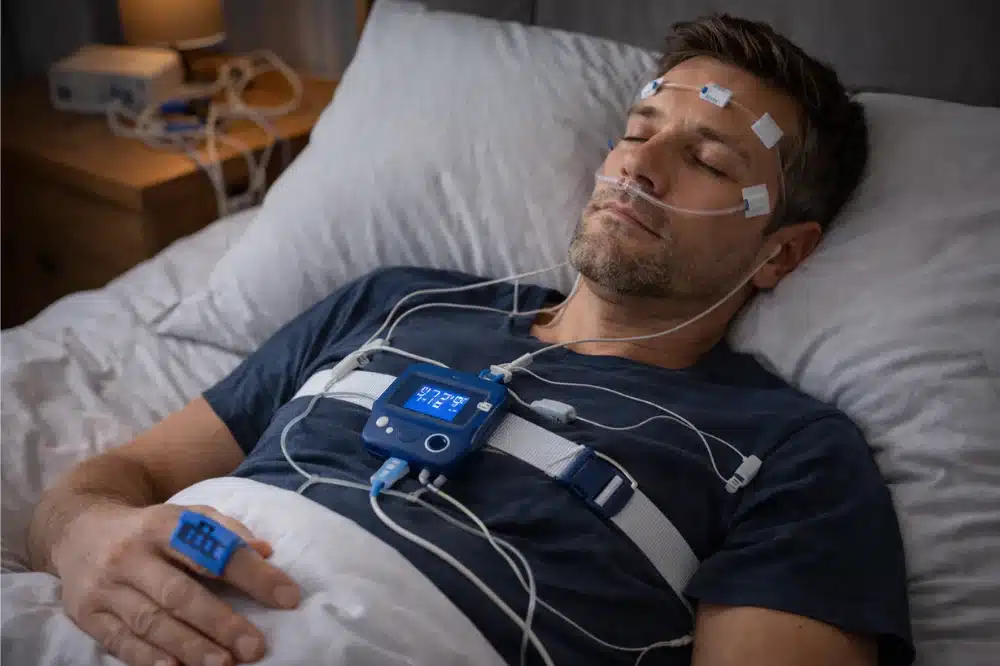
A home sleep apnea test is a portable study you use while sleeping in your own bed. It is built to answer one focused question, which is whether your breathing is being interrupted during sleep. That focus is what makes it useful and also what limits what it can detect.
The device tracks airflow, oxygen levels, and heart rate while you sleep. Some systems also measure breathing effort or body position to add more context. It does not measure brain activity, so it cannot show sleep stages or certain other conditions.
That difference matters more than most people expect. The test is not trying to explain every sleep problem you could have. It is trying to confirm or rule out obstructive sleep apnea with enough accuracy to guide treatment.
Can You Really Get Diagnosed with Sleep Apnea at Home?
This is usually the first question people ask, and the honest answer is yes, but only in the right situations. If your symptoms clearly point toward obstructive sleep apnea, a home test can often provide enough information for a diagnosis. That usually includes loud snoring, breathing pauses, and ongoing daytime fatigue.
What matters most is that the test is part of a bigger evaluation, not a stand-alone answer. A physician reviews your history, your symptoms, and the data together before making a diagnosis. If the results do not line up with how you feel, the next step is usually an in lab study to get a clearer answer.
Who Is and Isn’t a Good Candidate for a Home Sleep Apnea Test?
Home testing works best when the situation is straightforward. You have clear symptoms, your health history is stable, and there are no signs of more complex sleep issues. In those cases, it can move you from concern to diagnosis quickly.
There are also clear situations where a home test is not the right choice. People with heart or lung disease, suspected central sleep apnea, or other sleep disorders usually need more detailed monitoring. Children and teenagers also fall into a different category and are not evaluated this way.
This is where people often get stuck trying to choose on their own. The test should match the problem, not the other way around. Letting a provider guide that decision usually prevents delays and repeat testing.
How a Home Sleep Apnea Test Works in Honolulu
The process is simpler than most people expect, but each step still matters. Knowing what will happen ahead of time helps reduce stress and prevents mistakes. Most Honolulu providers follow a similar path from start to finish.
Here is how it usually works:
- You meet with a provider who reviews your symptoms and decides if a home test fits.
- You pick up the device or have it delivered with instructions.
- You wear it overnight at home and follow your normal sleep routine.
- You return the device and a sleep physician reviews the data.
Small details can affect the outcome more than people think. A loose sensor or too little recording time can lead to unclear results. Asking questions before you go to bed is often the difference between a usable test and a repeat.
Home Sleep Apnea Test vs In Lab Study
This is where people often feel unsure, because it sounds like one option should be better. In reality, each test is built for a different type of situation. The goal is not convenience alone, it is getting the right level of information.
| Feature | Home Sleep Apnea Test | In Lab Sleep Study |
| Location | Your home | Sleep center |
| Data collected | Breathing and oxygen signals | Full brain, breathing, and movement data |
| Best for | Uncomplicated suspected OSA | Complex or unclear cases |
| Comfort | High, familiar environment | Moderate, new setting |
| Cost and access | Lower, faster scheduling | Higher, may take longer |
When you look at it this way, the choice becomes more practical. Home testing gives you speed and comfort when things are clear. Lab testing gives you depth when there is uncertainty or higher risk.
What Happens After a Home Sleep Apnea Test?
This is the part where the test starts to matter, because the results turn into direction. You are not just getting numbers, you are getting an explanation of what is happening during your sleep. That conversation helps connect your symptoms to what the test actually shows.
From there, the focus shifts to what you do next. Treatment may include CPAP therapy, an oral appliance, or changes in sleep habits depending on your situation. The plan is adjusted over time based on how you respond, not just what the first test shows.
Questions to Ask About a Home Sleep Apnea Test
If you are unsure about what to do next, that is normal. Most people do not know what questions actually matter at this stage. Asking a couple of clear questions can make the process feel much more manageable.
Questions to ask include:
- Which test actually fits what I am dealing with.
- What happens if this test does not give a clear answer.
These questions keep the focus on your situation instead of the test itself. They also help you understand what comes next before you even begin. That clarity makes it easier to move forward with confidence.
Moving Forward With the Right Test
You are not trying to choose a device, you are trying to solve a problem. Poor sleep, fatigue, and loud snoring affect how you feel every day. The test is just the step that helps you figure out what to do about it.
Dr. Eugene M. Azuma and the team at Azuma Dental help guide that process so it does not feel overwhelming. They help you choose the right path and connect you with the next step based on real data. If you are in Honolulu and ready to figure this out, call (808) 528-2221 or visit 1060 Young St. Suite 220 Honolulu, HI 96814.
Frequently Asked Questions
Can I really get diagnosed with sleep apnea at home?
This matters because most people want a simpler option and are worried about making the wrong choice. What you should really be asking is whether your symptoms and health profile make home testing appropriate in the first place. A home sleep apnea test can provide enough information for diagnosis in uncomplicated adults with clear signs of obstructive sleep apnea, but it only works when used within a physician-guided evaluation, and if the results are unclear or do not match symptoms, an in-lab study is usually the next step to avoid missing something important.
Who should not use a home sleep apnea test?
This matters because using the wrong test can delay diagnosis and lead to frustration when symptoms continue. What you should really be asking is whether your situation requires more detailed monitoring than a home test can provide. Patients with complex medical conditions, suspected central sleep apnea, or other sleep disorders are usually better evaluated with an in-lab study, because home testing is designed for straightforward obstructive sleep apnea and does not capture the full range of sleep issues.
What if my home sleep apnea test is negative but I still feel tired?
This matters because a negative result can feel like a dead end when you still do not feel better. What you should really be asking is whether the test you took was the right one for the problem you are experiencing. Home tests can miss certain conditions or underestimate severity, so if symptoms continue, the next step is usually a more comprehensive in-lab study that gives your provider a clearer picture and helps guide the right treatment.
How fast can I get results from a home sleep apnea test in Honolulu?
This matters because most people want answers quickly so they can start feeling better. What you should really be asking is when your results will be explained and turned into a clear plan, not just when the data is processed. In many Honolulu practices, results are reviewed within one to two weeks, and that follow-up conversation is where your provider explains what is happening and outlines the next steps so you are not left guessing.