If your doctor has recommended a sleep apnea test, you may still feel unsure about what that actually means. Many people are told they need a sleep study without much explanation of which test is being ordered or why. That uncertainty often leads to anxiety, delays, or searching online for answers that do not quite fit your situation.
Sleep testing is not one single exam, and it is not ordered the same way for everyone. Different sleep tests look at different problems, and the most useful results come from choosing the right test for the right reason. Understanding how sleep tests work and how they are typically used in Honolulu can help you move forward with more confidence.
Why Sleep Testing Is Not One Size Fits All
Sleep problems can come from several sources, which is why testing varies. Some issues are related to breathing, while others involve brain activity, muscle movement, or how alert you feel during the day. A test that works well for snoring and breathing pauses may miss other conditions entirely.
Symptoms alone do not always tell the full story. Two people with similar complaints may need very different evaluations based on medical history, risk factors, and how symptoms behave over time. This is why sleep testing follows a stepwise approach rather than a single default solution.
The goal of sleep testing is not just to confirm a diagnosis. It is to collect enough accurate information to guide safe and effective treatment. Choosing the correct test at the start often prevents repeat studies and unnecessary frustration later.
The Main Types of Sleep Tests You May Be Offered
Most patients are evaluated using one of a few common sleep test categories, and each serves a different purpose. Some tests focus on breathing problems like sleep apnea, while others look at brain activity or daytime alertness. Understanding these categories makes it easier to see why doctors do not order the same test for everyone.
| Test type | Where it happens | What it measures | When it is usually used |
| In-lab polysomnography | Sleep center | Brain waves, breathing, oxygen, heart rhythm, movement | Complex symptoms or unclear cases |
| Home sleep apnea test | Your home | Airflow, breathing effort, oxygen, heart rate | Suspected uncomplicated sleep apnea |
| MSLT | Sleep lab daytime | How quickly you fall asleep | Narcolepsy or severe sleepiness |
| MWT | Sleep lab daytime | Ability to stay awake | Safety or treatment monitoring |
After reviewing the table, it becomes clear why one sleep apnea test cannot answer every question. A home sleep apnea test is designed for breathing disorders and cannot diagnose many other sleep conditions. When symptoms do not align with the test used, further evaluation is often needed to avoid misleading results.
In-Lab Sleep Studies and What They Measure
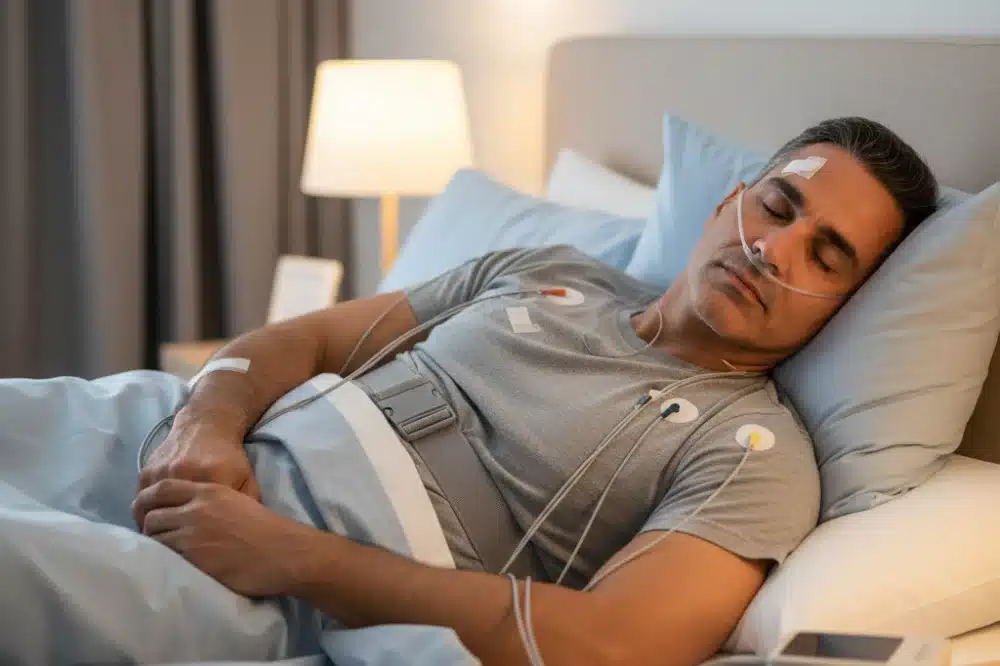
An in-lab sleep study is known as polysomnography. It records brain activity, eye movements, muscle tone, breathing, oxygen levels, heart rhythm, and body movements during sleep. This allows doctors to evaluate many sleep disorders, not just sleep apnea.
Some patients have a diagnostic study only. Others have a split-night study where sleep apnea is diagnosed early and treatment is tested later the same night. In some cases, a separate titration study is scheduled to fine-tune treatment settings.
Sleep labs in Honolulu are designed for comfort and privacy. A technologist monitors the study overnight and assists if sensors shift. Even if sleep feels lighter than usual, most patients sleep enough for reliable results.
Home Sleep Apnea Tests and When They Are Appropriate
A home sleep apnea test focuses on breathing patterns during sleep rather than full sleep architecture. It typically measures airflow, breathing effort, oxygen levels, and heart rate to evaluate suspected obstructive sleep apnea. Because it does not record brain waves or sleep stages, it is designed for specific clinical situations.
Home testing is most commonly used for adults with strong signs of obstructive sleep apnea and few complicating medical conditions. These tests are more convenient, usually less expensive, and often faster to schedule than in-lab studies. For many patients with clear symptoms, a home test provides enough information to begin treatment safely.
Daytime Sleep Tests for Excessive Sleepiness
Some sleep problems are defined by what happens during the day rather than at night. When severe sleepiness or difficulty staying awake is the main concern, doctors may order daytime testing. These tests always follow an overnight in-lab study.
The Multiple Sleep Latency Test measures how quickly you fall asleep during scheduled naps. It also looks for early REM sleep, which helps diagnose narcolepsy and certain hypersomnia conditions. The Maintenance of Wakefulness Test measures how well you can stay awake in a quiet environment.
These tests are specialized and not used for routine snoring or apnea screening. They are most relevant when safety, work performance, or persistent daytime symptoms are involved. Honolulu sleep centers offer these tests when clearly indicated.
The Sleep Testing Process From Referral to Results
Most sleep testing follows a clear, step-by-step process rather than a single appointment. Knowing this sequence ahead of time helps reduce anxiety and prevents surprises along the way. Each stage plays a specific role in reaching an accurate and useful diagnosis.
The sleep testing process usually includes these key steps:
- Initial evaluation with a primary care provider or specialist, where symptoms like snoring, breathing pauses, insomnia, and daytime fatigue are reviewed.
- Selection and scheduling of the appropriate test, such as a home sleep apnea test or an in-lab sleep study, based on symptoms and medical history.
- Completion of the sleep test, followed by formal interpretation of the data by a board-certified sleep physician.
- A follow-up visit to review results, explain the diagnosis, and discuss treatment options or next steps.
After the process is complete, the focus shifts from testing to action. The results are used to guide treatment decisions rather than simply label a condition. When patients attend their follow-up visit and understand the plan, sleep testing becomes a starting point instead of a dead end.
Sleep Testing in Honolulu and Across Hawaiʻi
Honolulu has several established sleep centers that serve Oʻahu and patients from neighbor islands. Many people travel to Honolulu for in-lab studies when home testing is not appropriate. This makes coordination and planning an important part of care.
Centers such as Sleep Center Hawaii, Kaiser Permanente Moanalua Medical Center sleep services, and Hawaii Pacific Neuroscience Sleep Wake Center offer a range of testing options. These facilities work with board-certified sleep physicians and modern equipment. Many also provide virtual follow-ups after testing.
Patients from areas like Makiki, Kaimuki, and Kapahulu often find lab access straightforward. Neighbor island patients may use home testing when appropriate to reduce travel. Asking early about scheduling and insurance helps avoid delays.
Questions to Ask Before You Schedule a Sleep Apnea Test
Before scheduling a sleep apnea test, many patients feel unsure about what the test will actually tell them. That uncertainty often comes from not knowing why a specific test was chosen. Asking clear questions early helps set expectations and reduces confusion later.
Important questions to ask include:
- Which sleep apnea test are you ordering, and what condition is it meant to diagnose.
- What conditions this test cannot evaluate, and what the next step would be if results are unclear.
These questions support shared decision making rather than second guessing. They help align your concerns with your provider’s clinical reasoning. Patients who ask them often feel more confident and prepared going into testing.
How Test Results Guide Treatment Decisions
Sleep test results shape the next steps in care. For obstructive sleep apnea, options include CPAP therapy, oral appliance therapy, or targeted lifestyle changes. Other sleep disorders require different treatments based on the specific condition identified.
Results explain severity, patterns, and timing, not just a yes or no diagnosis. That detail helps match treatment to your risks, symptoms, and daily life. Follow up visits turn the data into a clear, workable plan.
In Honolulu, care is often coordinated among dentists, sleep physicians, and primary providers. This coordination keeps treatment consistent, local, and easier to follow. Acting on results promptly is what leads to real improvement over time.
Moving Forward With Clear Answers
Sleep testing removes guesswork from ongoing sleep problems. A sleep apnea test, whether done at home or in a lab, provides objective information symptoms alone cannot. Clear results lead to clearer decisions.
Dr. Eugene M. Azuma and the team at Azuma Dental work alongside local sleep physicians to help patients understand their sleep testing pathway. If you live in Honolulu or nearby communities, use this guide to ask informed questions and prepare for next steps. Clear information is often the first step toward better sleep and better health.
Frequently Asked Questions
What is usually the first sleep test ordered for snoring and sleep apnea?
This question matters because patients worry about wasting time or choosing the wrong test first, especially when symptoms affect daily energy and health. What most people should really be asking is which sleep apnea test fits their specific symptoms and medical risk, not which test is easiest. In practice, doctors often start with a home sleep apnea test for adults who have loud snoring, witnessed breathing pauses, and daytime sleepiness without complex medical conditions, because it can reliably detect moderate to severe obstructive sleep apnea. If symptoms are more complicated or risk factors are present, an in-lab sleep study is usually recommended first to gather more complete data and avoid missed diagnoses.
Can a negative home sleep apnea test still mean I have a sleep problem?
This matters because a negative result can feel reassuring while symptoms continue, which leads to confusion and frustration. A better question is whether a home sleep apnea test was designed to evaluate the specific problem you are experiencing. Home tests focus on breathing and oxygen changes and do not measure sleep stages or brain activity, so they can miss non-breathing sleep disorders or mild apnea. When symptoms persist despite a negative home test, an in-lab sleep study is often the next step to collect more detailed information and clarify what is really happening.
How long does it take to get sleep study results in Honolulu?
Patients ask this because waiting for results can delay treatment and increase anxiety when sleep problems affect work and safety. What they should ask instead is when the results will be reviewed with them, not just when the report is completed. In most Honolulu sleep centers, studies are interpreted by a board-certified sleep physician within one to two weeks, followed by a visit, often virtual, where results are explained and treatment options are discussed. The review appointment is the point where testing turns into a plan, which is why it matters more than the report date alone.
Do all sleep problems require an overnight sleep study?
This question matters because many people assume an overnight lab test is always required, which can feel intimidating or inconvenient. A better question is which type of sleep test is appropriate for the specific symptoms being evaluated. Some sleep problems can be assessed with a home sleep apnea test or daytime studies, while others require full overnight monitoring to capture brain activity, movement, or complex breathing patterns. Matching the test to the problem improves accuracy and helps avoid unnecessary testing.